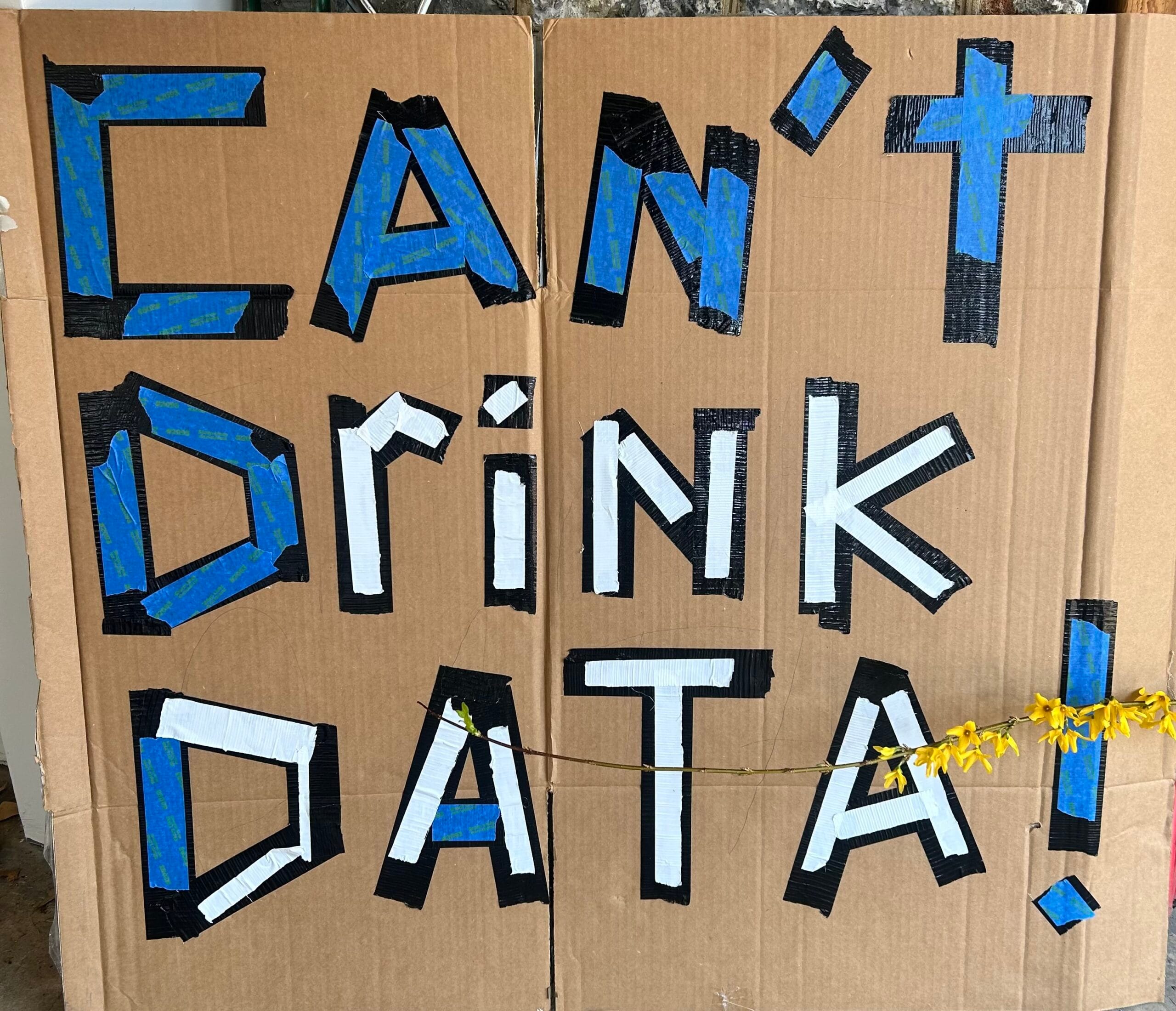
We live in a moment where some profiteers insist the future has the answers for a past that no longer needs discussion in this present. Good talk. Moving on. What’s done is done. Can’t change the past. It is what it is. Spilled milk and such.
When I hear these affirmations, they feel defensive, protective, and fearful. What can be so horrible to revisit, especially since we have survived it? Our being afraid or angry in the present shows that we survived that moment in the past to be impacted by it now. That part of the event (it happening in real time) is over and we are living proof … unless, are we afraid the crimes of the past might reveal ongoing harms now? Heavens to Betsy! Then its more reason we found out what is going on?!?!? Am I right? 🙂

I wonder if we can be thriving proof of past lessons when we take time to understand what happened, especially since we didn’t really when it was happening and we were surviving. I wonder what happens if we develop nuanced details of our lived experience in our own lives and relationships, in our families and friends and their communities, in our lineages, home keystones, memorials and political borders, without moral pretense while feeling the depth of the consequences of those choices in our present moment. I wonder what happens when we see choice points in history and imagine another choice was made … could we make that choice somehow now, with the light of history guiding us? How would that feel? What would our world look like without planned obsolescence, a personal favorite for example?
I used to say I was “lucky” in my 20s, something I think I mostly confused with the permissions granted by presenting as a white male. Nevertheless, I realized a key part of the formula of being “lucky” for me was actually tuning into other real people whose bodies lived though what I was figuring out (like coming out of the closet), seeking their guidance, and heeding their advice. If a mile in another’s shoes was to teach me something, I figured I learn additional clues to real living by asking them to tell me where to wear these shoes and where not to, at minimum, and whether there might be other shoes than those I might need, given their experience 🙂
As I age, I increasingly realize the mistakes made are where the wisdom comes from and at minimum I can offer others transparency on the mistakes I made. When I was young, I realized the anger of youth at the elders was based on this lack of transparency and clarity—that the knowledge and information behind their decisions in our political economy come without transparency and with a patronizing edge dismissing the youth as incapable of understanding. We were to respect the adults as self-evident which seemed suspect to me. Youth can detect the masks of aging conservatism quickly and the aging seem reticent to tell the youth the whole truth and nothing but that truth, fearing publicly it causes the youth harm, while internally repressing a lifetime of narratives that make the decision-making reflexive, lacking in critical assessment, or several sides to the story. The youth simply want to learn what worked and didn’t without the “I told you so” overtone. As an old person now, I simply want to speak to errors made when they are relevant to anybody I know without hiding the difficulties of the compromises I made. Regret is indeed a fine wine and its lessons worth sharing for better thriving. During caregiving for 8 years with my mom and her Alzheimer’s diagnosis, I would often say something like, “I cannot recommend to others to do what I am doing because my situation is unique based on our history.”
These are broad strokes to create archetypes: youth and elders; personal and collective; history and future and present. I encourage us to feel them as simultaneous, rather than binaries or simple triangulations. Utah Phillips has a whole bit about the past not going anywhere which he emphasized by saying he could go get a stone and drop in on your foot right now. That stone is as old as old gets and is still here now causing pain when poorly used and understood.
What am I to make of the division between history and me or you? Why am I asked to get up and shake it off? To forgive and forget? Who benefits from my “moving on”? What if I stay down and settle, getting up slowly and orienting to my surroundings? What if I remember, reconcile, repair, and rest? What if I take time to figure out what happened? What if I laugh about how ridiculous the actual circumstance we find ourselves sharing? I know that I feel better in my real bones when I know the knowns.
Somatic Enquiry’s Substack is a reader-supported publication. To receive new posts and support my work, consider becoming a free or paid subscriber.
By dwelling in the past, I might see choice points, specific moments of culpability without assassinating characters, and recover crucial details lost in the rush to move on. Archaeology proceeds slowly while the rush of the market proceeds at the speed of electricity. What if I dwell in the history and make it a living memory now? What harm is caused? I wonder perhaps there is less profit in an aware and educated population? I might even begin to reconstruct the political economy of our present moment!
I am most aware that those who seek to move on either don’t want to relive the memories or question the results. That means the past has captured us in a memory hole composed of embodied resistance, in felt jaw or gut tension when we refuse to discuss the past. Or the back is rigid, a rod against the gnawing maw of the unknown of history that might undermine the current facade. Gender, race, and class identity are wrapped up in real body positions, costumes, and discourses of permitted recall. Some memories (like the myth of the USA’s founding on July 4th, 1776) are repeated ad nauseam at the cost of others lost to footnotes (that the first shots fired by white settlers against the British happened 10 years earlier after the British made peace with the indigenous of the Great Lakes region).
When we get our history corrected and we are curious, the world opens up. When we feel silenced or invalidated, we turn our history into binary choices that had to be made (It is what it is. People hurt people. History cannot change human nature). When our history is silenced, we are left with the cruelty of present ignorance and bias. We get a confirmation biased assessment of reality. When the various memoirs and stories sing out, we see the wide diversity of being human that is hard to market in patriotic kitsch. We might get interested in preserving what we have, repairing what is broken, and making things to last.
I love history and following the events of the world because I see how I intersect and am imbricated and liberated by that collective felt sense. Understanding the world around me helps me understand myself. Understanding myself allows me innumerable ways to understand the people, the places, the waters, and the critters around me.
We know that tyrants come after history and insist on one true history often of one true race with a clear binary gender hierarchy and moral certitude that justifies its bombings and detentions. We know that real living means simultaneously conflicting narratives existing, unresolved, overlapping, cacophonous, and harmonious. The violence comes from forcefully silencing rather than hearing each narrative out. This happens when we won’t hear our own story, the story of others around us, and the collective story we call “history”.
When I sink into the memories, the stories of how this place came to be and the people in it; when I drink in the long stories of a given time, a trauma survived, or an injustice done, I am enriched, emboldened, and empowered to act with knowledge and embodied wisdom; when I hear the story, read the story, and feel the story, it becomes my story, our story, this story of how we got hear. When I share that context to another traveler in history walking down these paths we share the collective stories, implicitly. In this way, we never tell our tale alone when we speak our stories to each other. We open a world, a cast of characters, and an arc of drama and comedy with lived impact today. Our stories help us integrate what was broken or left out or troubling or particularly fun or curious or deeply moving or a call to action.
History, or better, histories are therapeutic because they use our noggins to make sense of our circumstance. These archaeologies distinguish individual agency, social structures, transcendental ecological shifts, and the long arc of light in the darkness shining on what could be, what is, and what was simultaneously. That light I see in the night sky may be seconds, minutes, hours, decades, hundreds, or millions of years in the making before it meets my eyes.
I am seeing what was, now, so that I may see what could be. I invite us all to help each other recall, remember, and share what was, so we may know where we are now, and imagine what could be. I suggest that history is therapy and therapy is a form of embodied and integrated history. Therefore, I dwell in what was, trying to shed light on what I find to share with others who remember, reconcile, and repair. What it was is what it is and will be.